Getting the Lead Out: A Scholar-Led Case for a Lead Ammunition Phase Out
The adverse impacts of lead dispersal by sport hunters on wildlife and human health are documented and conclusive. Over the past year, epidemiologists, toxicologists, economists, psychologists and wildlife veterinarians from Johns Hopkins, Yale, the University of California, Santa Cruz, Simon Fraser University, Michigan State University, the University of Warwick, Auckland University of Technology and the University of Inland Norway—have lent their research and their names to the fight to phase out lead ammunition. Their reports, testimony and letters have become the scientific backbone of our advocacy in Maryland, New York, New Jersey and Colorado.
The U.S. Fish and Wildlife Service imposed a nationwide ban on the use of lead ammunition in waterfowl hunting 35 years ago and it remains as one of the most important wildlife conservation and animal welfare policies adopted in wildlife management history. Yet 49 states continue to allow lead ammunition in sport hunting, dispersing massive lead loads across more than three-quarters of the nation’s two billion acres and subverting any principles of sound wildlife management and humane treatment of animals.
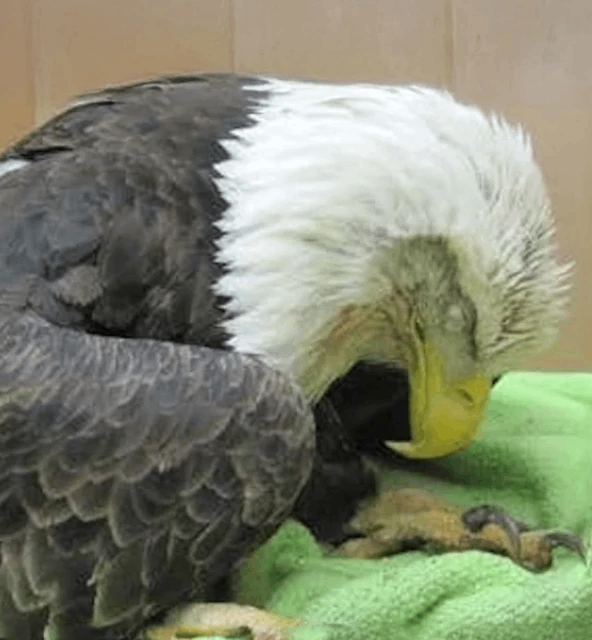
Our in-house scholars, James Keen, D.V.M, Ph.D., director of veterinary science for the Center for a Humane Economy, and Tom Pool, D.V.M, MPH, senior veterinarian for the Center for a Humane Economy, produced the scientific report “Lead Ammunition Imperils Wildlife, Hunting Families” in December 2025, a comprehensive synthesis of the evidence for policymakers and the public. Highlighting the landmark, continent-wide, eight-year study of 1,210 bald and golden eagles across 38 states published in the journal Science, the report notes that up to 47% of eagles carried bone lead concentrations above the threshold for chronic poisoning, with roughly a third showing signs of acute lead poisoning. It also documents that lead poisoning is estimated to kill 10 to 20 million wild animals of all species every year, as ground-feeding birds mistake lead fragments for grit or seed and predators and scavengers consume contaminated remains.
Dr. Aisha Dickerson, associate professor of epidemiology at the Johns Hopkins Bloomberg School of Public Health, has testified directly to state legislatures in support of our campaign to phase out the use of lead ammunition in hunting. During her in-person testimony to the Maryland Senate and House, and in her written testimony to the New Jersey Assembly, she explained that lead deposits accumulated in bone “can be released into the blood stream as bone metabolizes during pregnancy and lactation,” exposing “unborn children and infants during critical periods of development,” and that those same deposits “can metabolize as bones age, increasing the risk of cognitive decline in older adults.”
Drawing on animal studies from her colleagues, she told lawmakers that “carnivorous wildlife that consume carcasses of animals killed with lead-based ammunition have higher blood and bone lead concentrations,” and that “humans who consume game meat are at a higher risk of fragile bones and neurologic issues.” Speaking as a native Alabamian raised in a family of hunters, Dr. Dickerson testified that she “only became aware of the composition of the ammunition, the distribution of lead fragments in the carcass, and the risks of consuming contaminated meat” during her own postdoctoral studies. She urged both legislatures to act before a crisis forces their hand, noting that lead hazards like leaded paint and contaminated drinking water “evaded recognition until there was a documented population-level crisis such as elevated blood lead levels of children in Flint, Michigan” and that “these mass public health catastrophes can be avoided through implementing barriers to hazardous lead exposures in advance of a crisis.”
Dr. Myra Finkelstein and Dr. Donald Smith, from the University of California, Santa Cruz, jointly wrote to the New Jersey Assembly, describing themselves as researchers “with over 50 years of combined experience and over 150 peer-reviewed, published research papers related to lead exposure and toxicity.” Their work was instrumental in informing and supporting the passage of two legislative bills in California (AB 821 and AB 711) that led to the partial and subsequent full banning of lead-based ammunition for hunting. “The discharge of lead into the environment, via the use of lead-based ammunition for hunting, remains one of the most significant and largely unregulated sources of lead contamination,” they told lawmakers in their letter.
Dr. Finkelstein’s and co-author’s own recent publication in Nature Communications shows that California’s lead ammunition bans “successfully reduced California Condor lead poisoning risk, demonstrating the efficacy of legislation requiring non-lead ammunition for hunting to protect wildlife health.” As part of the Network’s effort, Dr. Finkelstein has also led and co-signed a scientists’ letter opposing a plan to rescind lead ammunition phaseouts in the National Wildlife Refuge System, and continues to guide our scholar efforts across the campaign.
An ever-growing cohort of scholars in our Network have written directly to state legislators. Jon M. Arnemo, D.V.M., Ph.D., a wildlife veterinarian and professor at the University of Inland Norway, has spent 25 years studying lead exposure from ammunition through a One Health lens. “The continuous use of lead-based ammunition by hunters will expose themselves, their families and other game meat consumers to a highly toxic metal that has detrimental health effects,” he states in a letter in support of our efforts. “Lead residues in gut piles left in nature will poison and potentially kill a wide range of scavenging animals,” he adds. “No More Evidence is Needed” is a title he uses to present scientific evidence on the detrimental effects of lead ammunition.
Dr. Bruce Lanphear, a physician-epidemiologist and professor of health sciences at Simon Fraser University and lead author of a recent lead-poisoning review in the New England Journal of Medicine, told the New Jersey Assembly that “there is no safe level of lead exposure” and that “the largest burden of lead toxicity today is cardiovascular disease in adults,” since low-level exposure “raises blood pressure, accelerates atherosclerosis, and increases the risk of heart attacks.”
Dr. Ludovica Gazzè, associate professor of economics at the University of Warwick, wrote in a letter of support that her research on childhood blood lead levels in Illinois found that ammunition and other consumer products play “a larger role” in exposure at lower blood lead levels than legacy paint alone, and that the harm compounds. Her study of North Carolina schools estimates the lost earnings of classmates of lead-poisoned children who fail to graduate high school at “$9.2 billion per cohort.”
Dr. Ted Schwaba, assistant professor of psychology at Michigan State University, cited his own research on more than 1.5 million Americans finding that children exposed to higher levels of atmospheric lead “grew up to be more disagreeable, less organized and less responsible,” concluding that “lead causes adverse outcomes on adult personality.”
Dr. Valery Feigin, professor of neurology and director of the National Institute for Stroke and Applied Neurosciences at Auckland University of Technology in New Zealand, wrote that “the link between lead exposure and stroke is well established,” since lead “raises blood pressure, damages blood vessels, accelerates atherosclerosis, and increases stroke risk.”
Dr. Peter Winch, professor in the Department of International Health at the Johns Hopkins Bloomberg School of Public Health, pointed to the global toll of lead exposure, citing “an estimated 5.5 million premature adult deaths from cardiovascular disease alone,” and testified that “hunting can be practiced without lead in ammunition” and that “the phase-out of lead ammunition will not adversely affect hunters.”
Economist Dr. Janet Currie of Yale University, whose research on more than 125,000 children in Rhode Island found that even blood lead levels of “2 to 3 micrograms per deciliter” measurably lower reading and math proficiency, wrote that “ingestion of even small amounts of lead through exposure to game hunted with lead ammunition is likely to harm children.”
The Getting the Lead Out campaign is a joint initiative of Animal Wellness Action and the Center for a Humane Economy to achieve, through legislative policy change, the transition from lead-based to non-lead ammunition used in hunting. Lead ammunition remains one of the largest intentional sources of lead: Approximately 10 million to 12 million hunters disperse up to 80,000 tons of lead into the environment each year, with the element being irreducible and accumulating year after year in the soil. Although it has been removed from gasoline, paint, plumbing and numerous consumer products because of its well-documented toxicity, millions of hunters continue to use lead bullets that poison wildlife and ecosystems, putting the health of the animals and the humans who eat contaminated meat at risk.
Scavenging wildlife, including bald eagles, golden eagles, California condors, vultures, hawks, foxes, coyotes and bears, consume lead fragments left in carcasses and gut piles, resulting in neurological damage, reproductive impairment, and death. At the same time, hunters and their families consume microscopic lead fragments embedded in game meat (most invisible to the naked eye). Children, pregnant women, and food-insecure individuals who receive donated venison are particularly vulnerable because there is no safe level of lead.
Replacing lead ammunition with non-lead alternatives, particularly copper and copper-alloy bullets, and steel, bismuth, or tungsten shot, provides equivalent or superior ballistic performance and, crucially, eliminates the toxic contamination associated with lead ammunition, protecting wildlife, environmental, and human health.
There have been notable successes in reducing the use of lead ammunition. Federally, the 1991 nationwide ban on lead shot for waterfowl hunting dramatically reduced lead poisoning among ducks and geese and serves as a model for broader reform. At the state level, California implemented a statewide prohibition on lead ammunition for hunting in 2019, demonstrating that hunters can transition to non-lead ammunition without reducing hunting participation.
We have been working with scholars to provide scientific backing to the campaign and achieve a phaseout of lead ammunition in Maryland, New York, New Jersey, and Colorado.
Our advocacy is moving forward on several fronts. We have submitted petitions in New York and Colorado, and companion bills have been introduced in the New Jersey Legislature: A5021 in the Assembly and S4225 in the Senate.
Opportunities for engagement
We are presently seeking expert letters of support for the New Jersey Assembly and Senate bills (A5021 and S4225, respectively), as well as letters to Colorado Parks and Wildlife (CPW) Director Laura Clellan supporting a ban on lead ammunition in hunting in Colorado. We are also seeking support for U.S. Senate and House bills, including H.R. 6268, to ban the use of lead ammunition on national wildlife refuges.
If you or a colleague would like to support our efforts to phase out lead in hunting by writing an expert letter, please email sfeigin@centerforahumaneeconomy.org